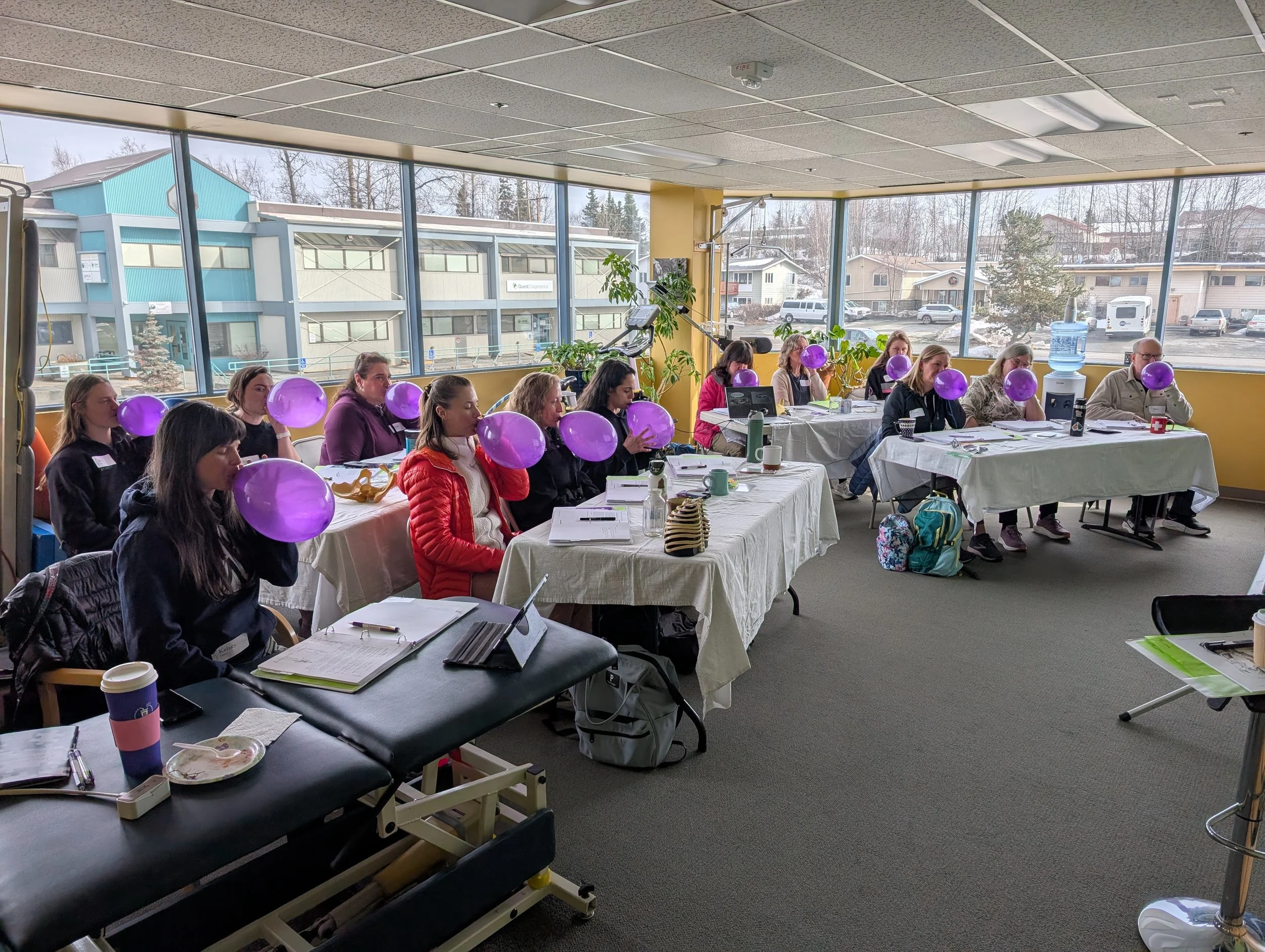
At The Physical Therapy Place we take a whole body approach (Postural Restoration/PRI) rather than simply treating one body part. We were the first physical therapy clinic focused on women’s health in Alaska, founded in 2000.
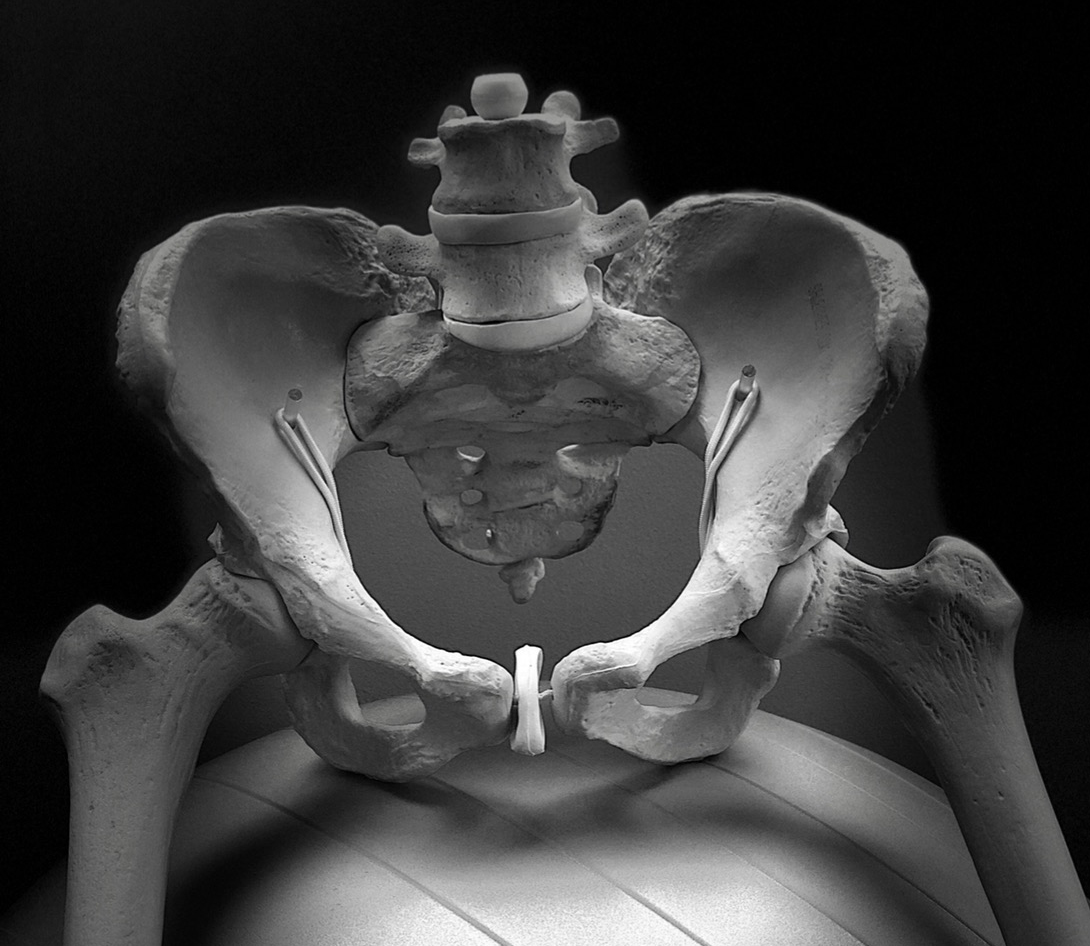
The pelvic floor is essential to our ability to function including gait, postural, respiratory, urinary, bowel and reproductive systems.
We evaluate our patient’s breathing patterns as this contributes to musculoskeletal and pelvic dysfunctions by impairing motor control and trunk stability and ultimately feeds into the functional impairments we see such as incontinence, pelvic organ prolapse, back, hip and pelvic pain.
The diaphragm assists in core stability through its influence on intra abdominal pressure. It works with transversus abdominis, multifidis and the pelvic floor to support the vertebral column. Proper diaphragmatic function not only allows us to breathe but also provides us with the postural stability that is required for complex movements. This allows optimal load transfer along the entire kinetic chain and minimizes stress on passive structures such as ligaments, joint capsules and joint surfaces.
If we restore proper breathing mechanics we can improve lumbo-pelvic stability, enhance motor control, decrease pain and improve patient outcomes.
How Postural Restoration/PRI Differs from Kegels alone:
System of Systems: PRI views the pelvis as one part of a larger system. If the rib cage and pelvis are misaligned, the diaphragm and pelvic floor cannot work together to manage intra-abdominal pressure, which is often the root cause of leaks during coughing or sneezing.
Restoring Neutrality: Instead of just "tightening," PRI uses breathing drills and specific exercises to reposition the pelvis. This helps restore the "ZOA" (Zone of Apposition) of the diaphragm, allowing it to move in sync with the pelvic floor.
Coordination over Strength: Research shows that in healthy pelvic floors, the muscles automatically shorten and "stiffen" the pelvic floor before a cough to support the urethra. PRI aims to retrain this reflexive timing rather than just building raw muscle strength.
Addressing Asymmetry: PRI identifies how dominance on one side of the body (often the right side) creates uneven tension, making the pelvic floor "weak" on one side and "tight" on the other. It uses asymmetrical exercises to balance this tension.
Many of our patients with head, neck and shoulder pain are also overusing their accessory breathing muscles. We teach how to decrease accessory respiratory muscle overload and increase the action of the diaphragm.
We recommend that patients with incontinence, prolapse, back, neck or pelvic pain be seen by a physical therapist for an evaluation that includes their breathing pattern instead of a generic exercise program.
Patients often only need a few visits at The Physical Therapy Place to change their dysfunctional breathing pattern and improve their pelvic floor function. We also teach strategies to use during exercise routines such as running, pilates, yoga etc.
An internal exam is frequently not necessary.
To make an appointment call (907) 569-5557.